Thursday, May 29, 2014

Initiative, weapon speed and reach

How we model melee in an RPG sets the framework for players to leverage their weapon's strengths and exploit their opponent's weapon's weaknesses. Weapon speed and initiative have been two variable commonly used in games to model this. Another variable that's used is weapon reach. Although less commonly so in my experience.

One variable that is seldom considered is character speed. We infer and sometimes we're event told that within the abstraction of combat rules characters are constantly moving, turning, evading and looking for a weak spot to attack. It is usually disregarded because characters and monsters move around each other at about the same speed as they turn, take a step forward or take a step backwards and prepare to attack. If this is constant or pretty much so that it can be disregarded then weapon length is a key element in initiative and getting the first hit.


After looking at the video I'm left with the feeling that a character with a dagger has no chance against a sword. Yet many modern sword and armor duels show the participants engaged in a way that looks more like a wrestling match than an exchange of sword swings. There's pummeling, grabbing, pulling, tripping and pinning to the ground. Movements that would benefit from the quick use of a dagger rather than a long sword. Swords are even grabbed by the opponent's gloved hand and they do little or no damage to full plate armor.

If distance grants the advantage to the longer sword and not the shorter dagger and if the dagger, nimble as it may appear when compared to the sword, is really not that much faster; where is the advantage? How can we leverage the different weapons' advantages? What happens when we change the sword for the polearm? Sure, it's longer and deadlier, but get close to the enemy and it's useless.

This brings me to initiative. To attack the polearm with a knife our hero must first wait for the initial assault (yielding initiative to the attacker), not get killed by said attack and then get close enough to attack and (hopefully) neutralize the polearm. Initiative in this case is not actually about rolling first, but rather rolling last. Wait, what if initiative isn't about going first or last (although this is a common understanding in RPGs and a common usage of the word). What if initiative is about doing things independently of outside influence or control (another definition for the word). How can we leverage the weapon's attributes in a way the character has the initiative without attacking first, or without attacking at all until she or he is ready? This would take initiative from being a round to round thing to something that spans rounds and builds on a series of successful initiative, not attack rolls. Remember the character is looking to get an advantageous position from which to attack without the risk of getting hit by the opponent's weapon. Things like armor rating and shield types don't apply to these rolls. What about mechanics that have partial success and partial failure values rather than binary hit or miss. These could be better applied to the polearm vs dagger situation. The polearm attacks and misses, but keeps the character at bay; or attacks and misses horribly exposing the character's side to a dagger attack. The dagger can use a succession of these critical misses to gain an advantage when actually stepping up to stab the opponent. The character with the dagger is losing initiative under the common understanding of the term "initiative", but he or she is actually maintaining initiative in the sense of controlling the encounter and weakening the opponent.


This post also appears on Indie+_ and is covered by the Indie+ Community Standards.

Tuesday, May 27, 2014

Is free good enough?

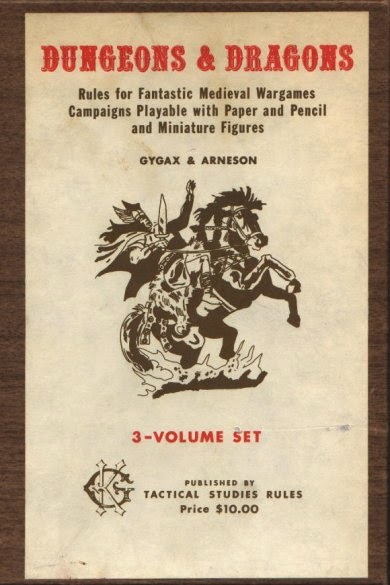
WotC revealed today what many called a bomb to OSR.

There will be a basic set and it will be free.

Although I agree it is a game changer, I would limit its impact to WotC and the original DnD. That's to say it keeps WotC in the game, nothing more. I applaud those who championed this idea and those in WotC who bought it and made it happen. It's a great step in the right direction, but it isn't a game stopper for OSR by a long shot.

Offering a product for free is a great way to get people to try it, but it hardly adds value in itself.The real test will come in a few months. I'll be honest, I haven't been following up on the D&D Next development and I certainly didn't sign into their playtest due to their NDA policies. So I won't comment on the specifics as I don't know them. I will though express my thoughts based on what has been mentioned and some observations of old RPGs, which by providence I've stumbled upon recently and have had the opportunity to read..

Lets go back two years to the beginning of the playtest. To me the NDA seemed too draconian. It's about owning and not sharing. I give WotC an idea, great it's theirs, end of transmission. They'll pick from there and build on it. We can discuss this on end as it has been done before, but that to me talks about an owning WotC and not a sharing WotC. Not a very good thing to start building a community about sharing and building together.

Second point is what Mike Mearls has commented over and over again. They're building D&D based on all that which we like from previous versions. While a valid approach, I will base my comment on the wisdom of Abraham Wald who, during WWII, suggested armor be added on bombers where the airplanes got shot the least, not the most. They returned to base because they hadn't been hit in those critical spots. Based on this I have commented that WotC should build D&D on the weaknesses of previous versions and by fixing them turn them into strengths. A fix to that which I don't like about 1st and 2nd would make me buy Next, not a copy paste of what I already have. Did they? I don't know until I read the rules (see NDA above), and I hope they have.

Corporate red tape. WotC like it or not suffers from corporate inertia and lawyers. Many OSR publishers are not slowed down by this.They call the shots, publish and get things out quickly. Their ability to innovate and take risks is higher than WotC. Many will flop, but on the other hand many do succeed, and boy do they succeed. I see WotC as the old vertical, waterfall, software development paradigm while OSR is the more dynamic and agile release early and release often. WotC spend 2 years doing what? Once again without the NDA I don't know. There is though an interesting analogy with newspapers 'Paul Berry, who helped found the Huffington Post, eloquently describes the core problem with the way The New York Times views content creation: “At The New York Times, far too often for writers and editors the story is done when you hit publish. At Huffington Post, the article begins its life when you hit publish.”' (source). Take a look at all the WotC release hype and compare it to OSR products. The big unanswered question with WotC is what comes after launch, after they've hit "publish". Is that the goal, the end, or is it just the beginning?

Innovation. What new stuff does D&D Next bring to the table? I'm sure it fixes many things, but aren't these design flaws of the past and not really innovation. Would you consider a vehicle recall an innovation? Once again I'm talking off the top of my head because to know I'd have to sign an NDA I'm not willing to sign, and once again I'd love to be proven wrong. Looking at old wargames and RPGs as well as the history of the d20 made me value the work put into creating the roots of our hobby, but it also made me look at dice mechanics differently. Not as dogma, but at a solution to a problem present in that time. The dice mechanics we so cherish today solved many issues from long ago which many are unaware today. They were innovative in their time. Fast forward 40 years and I'd ask. Is d20 a valid model? If so are we innovating in its usage? Solving problems of the past in new ways? In what way is WotC breaking away from the mainstream as Gygax did 40 years ago when he made a brief comment about coloring half the sides of a d20 (which were at the time numbered 1 to 10 twice). To answer the why of doing this Gygax mentioned he was working on a new set of rules that made use of this. The rest as we all know is history. Is WotC making history or is it making a new edition?

So as great and groundbreaking as a free D&D Basic set may be, and I applaud those who pursued and managed to achieve this goal, it's a long shot from being a game stopper for OSR. IMHO there's still a lot of work in regards to community building, community participation and innovation. Things which may be hard for a big company like WotC are much easier for the smaller and more nimble OSR publishers. WotC is still competing with people who do this for the sport, and they're damn good at this sport. So free by itself may not be good enough.


Image Source
http://www.lyberty.com/encyc/articles/d_and_d.html

Monday, May 26, 2014

There's always a bigger story

Many times when we create an adventure we expect it to go in a particular way. To have certain steps lead to a climax. We see it and envision it in our minds. Yet sometimes dice don't favor the players nor the GM and the adventure begins to stray from the plan. What do we do then? How do we fix it? Or is there an underlying issue we should solve first so we don't need "fixn'" in the first place.

Yes, there is a Star Wars story in which Greedo kills Solo and the Death Star isn't destroyed just then. It gets destroyed at another moment in time and by other means. If you're forcing the story to follow the footsteps of A New Hope then not only are you missing out on a great set of alternative outcomes, you're setting yourself up for a load of game mechanic pains.

The first step I take to achieve this is realizing there is always a bigger story and the initial plot line need not be the actual outcome. This requires that a) I have less of a reliance on the expected events occurring and b) have a backup plan. Realize that the world the characters are living in is a live and dynamic environment. It will continue to evolve as the characters interact with it. It isn't waiting for a preset of events to occur. It doesn't have a preset set of scenes and images like a computer RPG has. Don't throw away the greatest advantage a tabletop RPG has over a computer RPG!

Here are some guidelines:
  • Don't rely on a character or set of characters to make it to the end.
  • You should not fudge the rolls or bend the rules to force an outcome that's needed to follow the storyline.
    • Don't fudge to open a door
    • Don't fudge to save a party member
    • Don't fudge to convince the gatekeeper
    • Don't rely on a single character in the end scene. Actually now that I think about it, don't have a preset ending scene.
  • If something needs to happen and this depends on a die roll or the application of some rule with random outcomes, then there is something wrong with the adventure. You must either make the event independent of die rolls or have an alternative to handle a failure with the dice.


20 1st Level Millionaires, part 2

I continue the countdown of possible histories and backgrounds for millionaire 1st level characters. These are background stories for characters with a lot of wealth and no army nor castle.

15 - Family owns lead mine

Your family has amassed great wealth out of lead mining and ore processing. You have good access to resources to finance your dreams of adventure and dungeon explorations. While well known dungeons in the area may provide for your first levels of adventure it is possible that danger looms closer to home than you expect. A recent tunnel in your family mine has collapsed revealing a passage to a large cavern. What lies ahead?

14 - Banished nobleman

You're a banished lord or lady from a distant land. You've arrived here with gold and henchmen in a quest to rebuild your lost army and retake the throne that was stolen from you. You're unskilled, but the lineage of your family gives you great power should you learn to wield it. Will you survive to become a renown and respected warrior? Will you succeed in rebuilding your army and return home to reclaim your title as king or queen?

13 - Recently stolen loot

You're either the luckiest or the unluckiest of crooks. You've robed a wagon and it turns out you're a million GP richer. What now? What will you buy? What can you buy without raising too much attention? What will you do with this? Will you adventure and become a local hero? Will the true owner come back some day to retake this? And if so when and will you be prepared?

12 - Circus owner

You're a travelling circus owner. Wealth is not an issue. You're well over a million GP rich. You travel from land to land entertaining people. On each kingdom and barony you take time off to explore the city and its surroundings, gaining a little more wealth and experience from dungeonering. Yet there is also a dark secret. Something lives in your circus you don't want others to know. A curse of types you wish to get rid of someday. So you explore and quest to find the answer. Never staying too long in the same area and seldom returning.

11 - Bar or Hostel

You're the owner of a bar or hostel were travelers and adventurers usually stay to rest between trips and dungeon explorations. You know all there is to know about the land. The secrets abound in your bar and you've listened to them all. Suddenly you feel the urge to take on a sword and shield and explore on your own. Who will come with you and why? What new secret has moved you so much you're willing to leave the comfort and security of your home for the risk and uncertainty of adventure.


Thursday, May 22, 2014

Water, food and sleep

Usually we assume our characters rest and eat appropriately, and do so even deep in a dungeon, threatened by monsters that dwell in the deep passages and tunnels. They eat "iron rations" and take turns to sleep. But what is the true effect of not sleeping or lacking abundant food and water? What happens when these effects accumulate over time or become compounded as food lacks first, then water then sleep? To show this effect I've drawn up some graphs that show the combat effectiveness of men as these three things become scarce. I've also added some rules to manage this in a game.
The graph below shows the effect of no sleep, no water and no food over the course of days. Notice the steep slope for sleep and water compared to food. Now I don't believe anyone can go for three of four days without water or sleep without serious impact on their bodies. So dropping to an effectiveness of less than 40% can be very limiting indeed. A state of extreme weakness, disorientation and near comma. In game terms going below 60% should be very limiting and reaching 50% should be very impacting indeed. Very strong penalties at that point.

Spending a day without food drops effectiveness by 12%. This can be represented in game as a light penalty when performing actions. On the other hand, a day without foot or water drops performance by an outstanding 25%! And a day without water and sleep drops performance by a whooping 45%! By the end of the second day the character's performance drop due to lack of water and sleep would drop by 70%!!! A near death situation if you ask me.

Lets now consider situations in which sleep, food and water are not totally lacking yet they're not available in sufficient quantities either. We can imagine that such shortage would accumulate over time. In this case characters having a fraction of what is required will eventually build up a whole day's worth of loss, specially when doing strenuous activities such as exploration, travelling and combat. For example going with half the required amount of water will build up the equivalent of a day's lack of water over the course of four days.

Consider the following rules:

Food

  • A day without a warm meal counts as 1/8 of a day without food.
  • A day with half a ration counts as 1/4 day without food.
  • A day with one fourth of a ration counts as 1/2 day without food.
For example, travelling over tundra without a fire to cook will accumulate 1/8 of a day for each day. After 10 days of travel the character is suffering from a day's worth of famine (10/8 days = 1.2 days). Spending four days eating less than 1000kCal (half ration) is the equivalent of a day without food. If the rations are eaten cold it's the equivalent of a day and a half without food.

Sleep
  • A day with less than 8 hours, but more than 6 counts as 1/8 day without sleep.
  • A day with less than 6 hours, but more than 4 counts as 1/4 day without sleep.
  • A day with less than 4 hours, but more than 2 counts as 1/2 day without sleep.
Your party has been pursued non stop for the past 48 hours and has only managed to sleep about 3 hours every day. This is equivalent to a whole day without sleep and effectiveness drops by 25%.

Water
  • Each day with less than 2 liters of water but more than 1 liter counts as 1/8 day without water.
  • Each day with less than 1 liters of water but more than 1/2 liter counts as 1/4 day without water.
  • Each day with less than 1/2 liter of water but more than 1/4 counts as 1/2 day without water.
These quantities need to be adjusted for climate. Being twice as much in hot climates and four times as much in desert climates. The later can be reduced to three times if the character's activities are restricted to the cooler hours of the day.


Sources

Modern War in Minature, Michael F. Korns


This post also appears on Indie+_ and is covered by the Indie+ Community Standards.
Saturday, May 17, 2014

How we got the d20

Those d20 rules are quite common aren't they? They started back in the original D&D and have grown to cover quite a vast amount of genre. They're easy to understand and those 5% increments are sure easy to calculate. But where did it all start?

To begin to understand the story and the work it took to get our hobby up and running we must leave the internet generation behind and travel back in time. So back in time we'll leave the PC and Atari generation behind too. Even those, who like me, played with 4 bit graphics on a gaming console will be baffled by the limited technology of the time.

Sometimes this can be hard to relate to unless there's a reference we can carry back in time as a measuring stick. But what is easy to visually understand, computer intensive and can still relate to an era without video games? The Mandelbrot set. The Mandelbrot set a quite a complex image with its roots back in the 70's and will help me tell this story and hopefully carry you back in time, convey enough of the setting to help you feel inside the era and place the challenges they faced in perspective as they worked hard without many of the things we take for granted today. Without further delay lets travel back in time and see the dawn of the d20.

This is the Mandelbrot set. My cell phone (Samsung Galaxy III Mini) takes 0.97 seconds to render it, and that's on a bad day. Usually it takes between 0.45 and 0.65 seconds.


In 1984 a computer would take minutes to render it on a IBM AT at 8MHz with  80287 math coprocessor using a CGA graphics card with 640x200 resolution with two colors or 320x200 with four colors. Total hardware cost $4000 (1984) US Dollars.


In 1978 the first visualization of the Mandelbrot was made with ASCII. I don't know what computer it was nor it's cost, but I believe it was done at IBM's Thomas J. Watson Research Center in Yorktown, Heights, New York, and thus not cheap.


Now step back ten more years back to 1968...

Back then wargames were using statistical data from military experience to add realism to the game. An example of this is Korns' Modern War in Miniature (1966) which used percentage tables to represent weapon effectiveness. Yet his tables had the limitation of relating to d6 rolls. So Korns added a conversion table that related d6 rolls to percentages in, you guessed it, roughly 5% increments.


Those were numbers just waiting for the d20 to show up and it did in 1969, when they were mentioned in the "Must List" of Wargamer's Newsletter.


These 20 sided dice provided an easy way to generate percentile numbers by numbering their sides 0 to 9 twice and rolling two times.

Which brings me to Gygax's article "Four & Twenty and What Lies Between." (June 1973) and the reason I begun with all the computer stuff. In this article Gygax explains the probabilities for polyhedral dice combinations. Which he obviously calculated by hand since, as I already showed, there were no readily available computers and anydice.com was decades away. Quite a daunting task once you realize how limited and expensive computers were at the time.

Finally he comments that to him "the most useful are the 20-sided dice." and adds the note "color in one set of numbers on the die, and you can throw for 5% -- perfect for rules which call for random numbers from 1-20." What use could that have? In the same article Gygax reveals that he was  "busy working up chance tables for a fantasy campaign game." That game was, of course, none other than Dungeons & Dragons.

Now let it sink for a little. Let yourself get carried away to that time. Let the setting engulf you. Reread the Mandelbrot thing again and let it take you back to a time when computers didn't help us see things as advanced CGIs do today. A time when Tron was still 15 years away. A time when your imagination created and filled in all the detail on its own. A time when everything was new and no rules were set. Start fresh and use your imagination to create you fantasy setting, one without limits.

Roll for initiative, the adventure begins...

sources
http://en.wikipedia.org/wiki/Mandelbrot_set
http://www.davidlouislevine.com/mandelbrot
http://playingattheworld.blogspot.mx/2013/02/how-gaming-got-its-dice.html

Friday, May 16, 2014

20 1st level millionaires, part 1

So what would you do if your 1st level D&D character started off with a million gold pieces? This is a countdown of 20 1st level millionaires who didn't get a castle and an army with their gold. Without further delay here are the first five millionaires from our top 20 countdown.

20 - The Influential Cleric

Your family name could very well be Borgia. Dad's money has ensured you a prominent position within the city's temple. The temple's clerics respect your family wealth and envy you just as much. You're on a fast track to overtake many who have dedicated more to the gods than you have, and that's usually not a good thing. Your family wealth gives you access to resources such as armor, weapons, travel expenses and religious items. It buys you lots of stuff, but does not buy you skill nor the favor of the gods. You start off well equipped, but will you be able to overcome the risks ahead? The ones outside the city walls as well as those within the temple walls?

19 - Loan Shark

You've amassed a small fortune out of loaning money at high interest rates. Your wealth is in the hands of others generating a handsome rent every month. Your job is to make sure the payments are done on time and deal with those who forget who's the money is. About 4/5 of your wealth is in the hands of others. Now you must make sure that money keeps making more money. You finance trade routes, fleets, insurrections and small wars. You're an influential person when it comes to money and the power this generates. How will you manage this from now on is up to you.

18 - Crazy Wizard

You're an energetic wizard apprentice with a great family treasure supporting your wild and dangerous power quest. Getting a hold of scrolls, potions and magic items is easy. Managing their power is something else. Will your skill keep up to your ambition? This is a good character to play in a DCC game. Things can and will go astray with magic. How much will your character gamble? Will the wealth be enough to pay for the mistakes done?

17 - Librarian

You're a reserved, introverted and wealthy heir to a fortune of books. Remember that in the middle ages books were transcribed by hand and beautifully decorated. Each piece an art piece on its own. The knowledge withing a great desire to many rulers, magic users and clerics alike. Will you and your party harness the power of these books and the knowledge they hold? Or will you become a Don Quijote of sorts, driven to madness and mounting a decrepit horse in quest of imaginary giants? What yet undiscovered magic lays in the pages of your library's books?

16 - Sea trader

Your wealth is a fleet of very successful trading ships. Your a trader, merchant, pirate and buccaneer all in one. You know kingdoms and rules from the four corners of the earth. You travel from port to port trading silk and spice. Now you're driven to quest further into uncharted territory. What adventure lies ahead? 


Image

http://pqphotography.deviantart.com/art/Treasure-chest-350978300

Hostage Situation

Let's talk about hostage situations in RPGs. Not only in modern combat like games, but in general. Intuitively I feel friction, edgy. It's a situation most games I've played can't handle very well. On one side there's the negotiation aspect. Very role playish and usually one player does it. What do the other players do meanwhile? On the other side it can change from role playing and negotiation to a combat scenario very quickly. A combat scenario that needs to be resolved quickly and with little margin for error. Lose initiative and the bad guy shoots the hostage or detonates the vest. Miss and the outcome is just as bad if not worse.

The main issue I see is that a lot of games that are strong in handling character emotions and feelings are a bit weak in handling combat and games that handle combat well are a bit impervious to such aspects of character development and negotiation. More so, even if you can handle the negotiation aspect as pure player based role play between both the player and GM, what about a shoot out? Things go sour and suddenly the bad guy needs to be taken out. Do you trust your initiative and attack roll that much? Is the skill mechanics good enough to make you feel confident you'll get first shot and will not miss?


As a closing treat here's the floor plan to Big Bang Theory's main apartments. Good luck saving Penny form crazy Sheldon.


Image source

http://www.brokenarrowok.gov/index.aspx?NID=449

http://www.pastemagazine.com/blogs/awesome_of_the_day/2013/05/inaki-aliste-lizarralde-is-a.html

Saturday, May 10, 2014

The millionaire peasant

So your character starts with a million GP. This post has created a great deal of feedback. Some very valid if viewed from our early 21st century outlook on life. A great deal of players have said they'd buy an castle and an army. This is a very understandable aspiration from our point of view, but it rises the following question:

Who the fuck is going to sell you a castle if you're a fucking peasant?!?!?!?!

Now my intention is not to trash those who commented along those lines, but rather to raise the issue of how immersed are we in the medieval setting. BTW, I'm not using immersed in a game theory way so don't trash me back. I'm simply wondering how well players dive into the setting of a medieval society.

If you have a million gold pieces to start you already have a good social standing. Otherwise you're just a bandit, or maybe some bourgeoisie of an era still to come. With a million GP you're certainly a noble and maybe a courtesan. You'll probably be skilled at fighting, but you'll have others do the fighting for you. You will lead, and leading will exercise those atrophied aspects of D&D. You know which, charisma and that sort of stuff.

Sit back and think about what it meant to have power in the middle ages. Was it just gold? Does gold make you powerful or just a rich bandit? Who conspires in court? Who negotiates the deals? Who leads the armies? Is it the +3 attacks, x2 damage, 3d12 + 2xSTR bonus fighter or the cunning noble with an even cleverer player behind him?

Images
http://www.whiteoak.org/wp-content/uploads/2012/09/Medieval_Morons.jpg

Introducing the Grimscience d20++

Back in the day when it all begun (D&D, not Earth), there were no d10. Actually d20 were numbered 1 to 10 twice and you'd roll a d6 or something extra to see if it was the high or low values.


Then came this jewel of advertisement from Gamescience. Let's put pluses to half the sides and call it a d20 Plus dice. It even allows you to roll d2!!! Wait, isn't that what a coin is for?

So now that we've crossed the barrier into rolling d2 with a d20, what else can we do? How much can we overload the d20? Here at Grimscience we put d20 and C++ together and developed the d20++. Can you play D&D with just one 20 Plus and one d6?

No you say? Well with d20++ you can! With it's exclusive worldwide patented technology Grimscience d20++ allows you to roll d0, d1, d2, d4, d8, d12 and d20!!! Not only does it allow you to roll all the polyhedral dice commonly used in an RPG, it also adds d0 and d1.

Tired of your players calling it GM fiat? Worry no longer. With Grimscience d20++ you can now roll d0 so they can't say it's GM fiat.

Worried the party won't overcome a critical challenge that's fundamental for their advancement in your railroaded adventure? Worry not! With Grimscience d20++ you can now roll d1 and guarantee success every time, all the time!

Lets look at all the great new features implemented in d20++:

d0 - Like /dev/null, it's always present and you always get the same result "nothing". Commonly known as GM fiat it's done by using the patented Null Roll technology in Grimscience d20++. This provides and outcome for the GM's without actually rolling the d20.

d1 - This is like the exact opposite of d0. It's handy in poorly designed adventures and with temperamental GM's. A great railroading device it's done by rolling the d20 and totally disregarding the result. It's very useful in situations like the-only-locked-door-to-the-boss-chamber-which-the-rogue-needs-to-pick.

d2 - A carry over from the old 20 Plus. It is resolved by rolling the dice and taking the + as 1 and the blank sides as 0.

d4 - A new overload functionality to 20 Plus, Grimscience d20++ allows you to do d4s too. Just roll the d20 and divide by 5 and round up to the next whole number.

d6 - Just roll a d6, don't be stupid. Who'd patent a d6?

d8 - Another great and exclusive functionality of the Grimscience d20++. Just roll like you would to get a d4 and add a d6 if the d6 rolls 1 to 3 you use the direct d4 result if the roll is 4 to 6 you add 4 to the d4 result.

d10 - A shared feature with 20 Plus. Roll the die and read the number directly. Values go from 1 to 10.

d12 - Yet another outstanding and exclusive functionality of the Grimscience d20++. Roll a d4 and a d6. If the d6 rolls 1 or 2 leave the d4 value as is, if the roll is 3 or 4 then add 4 to the d4 and if the roll is 5 or 6 add 8 to the d4.

d20 - A shared feature with 20 Plus. Roll the die. Sides with a + get 10 added to their value.

So don't miss this great opportunity and order your Grimscience d20++ now!
Don't miss this weekends launch price!
Order now!

Not available on hangouts, roll20, electronic die rollers nor macros (yea savagedaddy, we're talking to you).


Thanks grognardia for bringing this back to light!

Friday, May 09, 2014

Starting with a million GP

Lets do a little experiment. Have your D&D character starts off with a million gold pieces. That's a lot of money. It buys a lot of stuff, but it doesn't buy skill. How does this affect the game?

It's one thing to have a + 5 sword and quite another is to defend it against a 6th level fighter. Gold plated full plate? Mithril armor? All great assets a greater fighter would like to take from you, or a rogue for that matter.

Would you fight the monsters the same way? Fighting those goblins may earn you a few hundred pieces at best, but you may lose a million if they kill your character. All of a sudden being all bloodthirsty to kill and pillage doesn't look all that tempting. So how do you earn XP to increase your character's level without risking the family fortune?

Some GMs may think this will lead to an unbalanced game in which the characters become too powerful due to unlimited wealth. I'd agree to a point. Initial wealth does solve a great deal of issues we as players face during the first levels, but it also brings a whole new set of issues to the game. Defending such wealth and the goods it can buy is one of them. It also kills one of the main drives to center the game around fighting and pillaging.

In my experience wealthy first level characters has open up some interesting options in the game. On one end there is more diplomacy and negotiation taking place. This can be interesting to players looking for a campaign less centered around hack and slash. On the other end such wealth doesn't only buy henchmen, it buys a whole army, and mass combat is lots of fun!!!

So what do you think? Have you given your first level characters huge wealth? If so, what has been your experience? If you haven't, would you?


Thursday, April 24, 2014

Vector Insects

A vector insect is one used by another insect as a vector to infect a human host. The vector insect is trapped and eggs are laid on it. When the vector insect bites, stings or in any way does whatever it does to a human, an egg is laid on the human host. The human's body heat activates the egg which uses the vector insect's injury to get under the skin (literally). Once inside the egg grows to a full and rather disgusting larvae.

The potential use for this in a monster manual is huge, albeit a bit appalling and it does scream GM fiat all over. Imagine all those little critters you once found in a dungeon now laying eggs on mosquitoes that fly into town. Remember the dreaded rot grubs? Now you don't have to journey deep into the forest or a dungeon. They're delivered fresh to your home by your friendly mosquito.


Or maybe the villages honey bees are now infected with some terrible bug using them as vector insects. 

Why stop with insects. Curses and even zombification can be airborne on mosquitoes and other vector insects. Maybe even the G'ould evolved to be airborne that way. Chilling thought.


Source

http://www.iflscience.com/health-and-medicine/nsfl-botfly-removal-5-year-old%E2%80%99s-eye
http://forum.rpg.net/showthread.php?680134-Why-did-D-amp-D-amp-Pathfinder-art-become-so-stylized/page6


Monday, April 21, 2014

Cover, hit rolls and damage

Firing a weapon from cover requires the exposure of some parts of the body. Generally the less critical hand and arm and the quite critical head. This increases the risk of mortal injury if hit. It also raises the question about damage capacity of an attack and the character profile to the enemy as the encounter progresses. How do attack and damage rules affect the way the character appears from the enemy's standpoint?

We're used to attacks having a set amount of possible damage: 1d6, 2d8, etc. But what if the damage didn't only depend on the weapon, but on the target area? After all getting hit on the hand, as painful as it may be, will not be immediately life threatening. There should be a cap on the amount of damage that can be delivered to such body parts, right?

Asking around I got feedback on this issue. The comments can be grouped into two camps: a) some games (Hero System for example) have such rules and b) that's already taken into consideration in the damage roll. The former puts me in a cold sweat, I certainly don't have any interest in creating something as complex as Hero System (all due respect to those who enjoy playing it). The later leads me to ask the question: are the odds of hitting a certain body part a property of the setting and current storyline or are they a property of the damage roll, the hit roll or the character's hit points? Does this lead to certain body parts being "more visible" and "less visible" as the character's hit points change or the enemy changes weapons? Are rules affecting (and limiting) the storyline instead of helping narrate it? Let me explain.

Lets say a character has 12 hit points and the weapon does 1d6. We might interpret a 3 to 6 as a head wound with varied degrees of severity and a 1 to 2 as a hand injury. The first contradiction is that a head wound would never kill the character. Even the deadliest of hits would only reduce the character's hit points to half. To handle this we may totally exclude a head wound and as a storyteller one may just narrate that the hit impacts the hand or lower arm, sparing the head from any injury. But this totally excludes the possibility of a head wound in the beginning of the encounter. Rules are dictating what we can narrate.

Now as the character's hit points drop and reach a level of 3 o 4 remaining hit points it is quite hard to exclude a head wound from the storyline. It is very hard to narrate a hand wound at this point because it would be very hard to convince someone that their character died because he bled out of his pinkie. Once again the game mechanics are forcing the storyline and our trusty character is going from being this in real life:


to this at the beginning of the encounter:

and this as hit points are depleted:


It is clear from this example that the rule design affects the story's potential. A storyline's plausibility depends on the weapon used and the character's hit points instead of the current setting, actions and skills of those involved.

Question here is how to create a set of rules that describe what's happening without limiting what can happen. Games that take on a more narrative focus have less of an issue with this, but games with different mechanics could suffer from the aforementioned issue.

I'm looking at handling damage differently. First there's the hit roll, the the impact area is determined and finally the damage, which depend son the impacted area. This sounds a bit more complicated as it adds another die roll, but it can also be a means to simplify things. Here are some considerations:

  • Hit rolls with various degrees of success rather than a binary outcome. This can help determine the impacted area by GM ruling rather than another die roll.
  • Fixed damage to non critical body parts. If the hit roll is a marginal success then a hand or foot is hit, or the hit is just a flesh wound.
  • Roll for damage only on good hit rolls that represent a severe or critical hit.
Thoughts? What would you propose or what games have you played that keep the character looking like the following image all through the encounter instead of some deformed version of it?


Image source

http://www.talkingproud.us/PhotoGallery/page98/PhotoGalleryServeSacrifice.html

http://www.defense.gov/Photos/NewsPhoto.aspx?NewsPhotoID=9828


This post also appears on Indie+_ and is covered by the Indie+ Community Standards.

Thursday, February 20, 2014

The physics of magic and the wizard's stats

A wizard conjures a magic missile, fires it off and hits without even rolling to hit and without any recoil. The hail of stones rushes forward from the mage's hands. A lightning bolt strikes out from his fingers. All of this without any apparent physical effect on the sorcerer. Why?

Isn't that magic missile pushing against something as it is sent forward? For example the magic user's body, in the same way a rifle pushes against the shooter's shoulder. Non inertial magic is a term I'm using to refer to all that magic we love to use which has no physics to explain how it comes to be (which is fine, it's magic), but also has no physics to explain how it affects or doesn't affect the environment around it either.

What would the effect be if certain types of magic had inertia? Sure you can conjure a rock, but quite another thing is to throw it. Sure, magic can work as a hydraulic system, empowering your body, but there has to be some underlying strength. Factor in the strength in such a spell. The rock's weight can't be any arbitrary number, but rather a multiple of the wizards strength not his intelligence or wisdom.

Got a lightning bolt? Sure, but those six plus digit voltage levels are going to have an ionizing effect on anything nearby, including the magic user. Consider constitution or endurance. Even some "temporary" off the record hit point loss that represents the "ionizing damage" the bolt does to the wizard. These "pseudo" hit points hit zero? No more lightning bolts until they're recovered.

Want to invoke a daemon with low charisma? Good luck with that. The creature may be summoned and under the wizard's control, but flattery will still go a long way in granting you what you want.

Although I've seen some games include more than intelligence or wisdom into the "magic equation", it is not a common practice across the board and magic remains pretty much "non inertial". There is seldom any negative feedback rule a magic system or some sort of diminishing return model that may lead to a capped power growth for magic users. The magic user just keeps growing and growing usually based on one stat and at best sometimes two.

What do you think? Do you believe magic users have it too easy just relying on one or two key attributes and having everything else work like magic (pun intended)? Or should more attributes and values be taken into consideration when developing magic rules and spells? Would this help solve the exponential vs linear power growth many of us complain about?

Here are some ideas I'd like to put forward

  • If your game has spells organized by spheres or groups, relate an attribute to each and require higher attributes to use such a sphere. Even have magic that doesn't require high intelligence or wisdom. Some instinctive power of a tribe that relies on other attributes. 
  • Factor in attributes into the spell. How effective a spell is depends on other attributes aside from intelligence. A fighter, due to strength or endurance, can be more effective with a spell through a scroll than a magic user of considerably higher level. A rogue, due to agility, a can perform a task better with a ring than a magic user of a higher level.
  • If you're considering failure mechanics in your spell system then relate these to attributes as well. A spell that requires agility may be more prone to failure if the magic user isn't nibble fingered. The aforementioned lightning bolt may be more prone to injure the magic user if he has low endurance.


Image Source
http://www.deviantart.com/art/undead-wizard-77297566


This post also appears on Indie+_ and is covered by the Indie+ Community Standards.

Sunday, February 16, 2014

Poor Death Star Design

There's an open letter from the Death Star's designer Dak Exhaustport explaining why it wasn't his fault the Death Star was destroyed by a group of small fighters. While I do understand his concern regarding the 90° turn at the vent entrance and I too find it suspicious. I have to challenge his claim that he is without fault. It is true that there was a conspiracy to destroy the empire. It was clearly being carried out by Anakin Skywalker and his son Luke. Clearly it was meant to exploit the emperor's desire to bring Luke to the dark side and it was meant to take place when they met and not sooner. Unfortunately the whole Death Star thing blew up in Darth Vader's face and he had to postpone the meeting between Luke and the emperor.

Now back to the Death Star vent port issue. Dak Exhaustport claims it isn't his fault. That other issues lead to the exploit of the vent and not his lack of foresight. I say that it is not only a design which exposes the battlestation's core to a fighter attack, it is also a very inefficient one. Even for Earth's standards nowadays. Let me present exhibit A. It clearly shows the vent port going from the surface straight to the core. Literally straight to the core.

So while I do admit it is possible to use the force to turn the torpedoes 90° at the entrance of the vent, it would have been impossible to guide them through a maze of turns all the way to the core. The force is strong with Vader and Luke, but without visual sight it would be impossible to guide regardless of their skill with the force. This leads me to exhibit B, C and D.

Exhibits B and C show modern day Earth ventilation designs in which turns are clearly visible. Hot fumes can easily handle turns in the ventilation system. If Dak Exhausport had placed a few turns in the shaft as it lead down (or up, however you see it), the Death Star would still stand.

The design was also a poor one as Exhibit D shows how one shaft usually terminates. It fans out to a set of actual ports that provide even ventilation to the area the vent is meant to cool. So we would expect the controversial vent to fan out as it approached the core. This makes sense because a single port would be able to cool the area in its vicinity, but not areas in the opposing side. This would lead to thermal differences within the core. If the vent fans out into a set of vents around the core the overall effectiveness of the vent system increases and removes the possibility of a torpedo reaching the core.

So though there is the aggravating circumstance of the whole Skywalker conspiracy, the fact stands that Dak Exhaustport is entirely responsible for the destruction of the Death Star. Not only is it a poor vent shaft design as shown by exhibits B to D. It is also on that leaves the whole battlestation susceptible to external attack by a lone fighter pilot.

Exhibit A


Exhibit B


Exhibit C


Exhibit D


Image sources

http://static4.wikia.nocookie.net/__cb20131105191250/starwars/images/7/7d/Death_Star_Owner's_Technical_Manual_blueprints.jpg

http://www.brita-in-pubs.eu/bit/uk/03viewer/retrofit_measures/pics/solar_ac_pic1.jpg

http://capitalsteelbuildings.files.wordpress.com/2011/04/duct-system-in-commercial-buildings-for-sale.gif

http://centralair.net.au/images/packagedunits.jpg

Thursday, February 13, 2014

The calendar as a story element

The calendar plays an important aspect in our lives. It tells us when winter or summer occur. When to plant and when to harvest. It marks certain days to celebrate, commemorate and hold ceremony. Now we usually run on a 365 day calendar, but what if we had two calendars and they weren't the same length. These two calendars are in turn broken into smaller elements which fit together as gears in a machine. Each tooth of each gear means something and as they turn they unfold the destiny of men. Such is the nature of the Aztec calendar. The ultimate random encounter table.

The largest of these set of gears is the xiuhpohualli (year count) a calendar year of 365 days. It is composed of 18 months (metztli) of 20 days each and 5 dark days called nemontemi. The tonalpohualli (day count) is a smaller set. A 260 day ritual calendar comprised of 20, 13 day periods, called trecenas. The xiuhpohualli (year count) and tonalpohualli (day count) spin together giving a year count and a day count for every day in a man's existence. They spin and spin in a cycle that repeats itself every 52 years. A century for the Aztecs sometimes called the calendar round.

The days in the tonalpohualli (day count) each have a name of either an animal or object which indicated what influenced such a day.  Some sample name are house, lizard, death, water, grass, and monkey.  These days also have a cardinal direction (north, south, east and west). Together these elements carry strong omens and meanings to those born in such days, those wishing to marry, venture on trips, build a house or make war.The cardinal directions were related to gods and held their own symbolism. The East to the God of Rain: Tlaloc, life and fertility. The East was the start of the Sun's travel. The West belonged Chalchihuitl, the Goddess  goddess of water, rivers, seas, streams, storms, and baptism. The West also marked the end of the Sun's path. Mictlantecuhtli, the God of Death, Power and Force, owned the North. The South was Xochipilli's, the prince of flowers, god of love, games, beauty, maize and pleasure.

For example, a dire time to travel was the first day of the five western trecena, (1 Deer, 1 Rain, 1 Monkey, 1 House, and 1 Eagle). On those days the dreaded vampire like Cihuateteo would roam road crossings. Stealing children, causing illness and even attacking weary travelers.

Thirteen of these days build up a trecena. There were 20 of these in a tonalpohualli (day count). Each one of these 20 trecenas was associated with a particular deity. These deities held power over these days, sometimes for good and sometimes for ill.

All of this in turn fits into the 365 day xiuhpohualli (year count) calendar, which had it's own days and months! Can you see how the mother all of random encounter tables begins to build up? What fortune will this day bring to the party? Well what god influences the xiuhpohualli month and what god the tonalpohualli trecena and what day is it? Is it a north, east, west or south facing day? Is it a benevolent god? Are we in the dreaded last 5 days of the xiuhpohualli. If so, let's stay in the tavern a few more days.

While two interwinding calendars may be too much for some, a simpler model can be built to add flavor to your setting and particularly your clerics. In your campaign you can set up months and days with each of the important deities, the good and the bad. The meanings for each day. As the gears spin and spin they crank out new paths for the adventure. Giving a good day to travel once then an ill day for a journey at some other time. Calendar dates may put pressure on the party. They have to reach their destination before the end of a certain 13 day period or depart during a certain month. Even small daily omens can help resolve what kind of creature the party will meet and what fortunes lay ahead before sun sets.

If you want to see this in action I strongly recommend the following site. Punch in today's date and read the significance of this day in the Aztec calendar.

http://www.azteccalendar.com/

For deeper look into the Aztec and Mayan Calendar take a look at the following:

http://en.wikipedia.org/wiki/Aztec_calendar

Image source
http://en.wikipedia.org/wiki/File:Xiuhtecuhtli_1.jpg


This post also appears on Indie+_ and is covered by the Indie+ Community Standards.

Tuesday, February 04, 2014

Opposing die rolls

As players we are used to rolling to beat a target number with our dice. What I've been looking into and using in my games recently is rolling dice to beat a difference between dice. So instead of rolling 14 on a d20 or higher you need to have a difference of 5 or higher between two d20s. How does this work and how does it affect the game?

How does it work? Simply put the player rolls dice and the GM rolls dice. What matters is not the value each one rolls, but rather the difference between these rolls. To make a simple example lets play with d10s. A task has to be solved and the GM sets the difficulty at 5. To succeed the player and GM roll a d10. The difference between the rolls has to be 5 or greater to succeed.

The odds for a d10 - d10 is the following:


Since we are only concerned with the difference and not which is higher we must consider the absolute value of the die roll as show in the following graph:


Why has this caught my attention lately? Well for starters lets look at more complex dice. Look a the d20 vs d20 and 2d20 vs 2d20 below. The 2d20 vs 2d20 gives a nice flat curve towards the higher values. This means high difficulty tasks are going to be very improbable to succeed at unless the character has a lot of skill.

For example if the task requires a 32 or higher difference between the rolls the odds of success are minimal. If the character has just a +3 from skill the odds don't budge the slightest. On the other hand a character with +10 bonus would get considerable benefit, he's an expert. Yet this might not be enough to ensure an acceptable degree of success. Come in team play. Since there are a lot of values (0 to 38) it is easy to implement a mechanism for team play and group cooperation. If 4 characters all add their +4 to the task thats +16. It drops the difficulty from 32 to 16, making a task with 0.5% chance of success into one with 20% chance of success.

Finally the thing I really like, and that's because I'm a wicked GM, is that this keeps the players guessing. I don't have to reveal my roll and since there's no target value they're left guessing if they succeeded or not. Specially in the easier tasks. If the task is hard, once again taking the 32 difficulty rating as an example, it's pretty obvious from the player's roll which option is a winner and which one isn't. This is similar to real life, if the task is hard and you're not very experienced you don't raise your hopes up of having a success and you pretty much know you blew it. On the other hand if the difficulty is 10, there are a lot of values that I can roll as a GM that will give them a 10 or greater difference. The player rolls a 15, and well a 0, 1, 2, 3, 4, 26, 27, 28, 29, 30, 31, 32, 33, 34, 35, 36, 37 and 38 on my roll would mean failure. What did I roll? Did I roll these less probable values or the more probable ones between 5 and 25? Time to open the treasure chest and find out.


This post also appears on Indie+_ and is covered by the Indie+ Community Standards.

Thursday, January 30, 2014

Unplayable character? What is that?

A recent conversation about character attribute rolling brought up the concept of "unplayable character". What is that? A character with such poor attributes it can't be played? But why can't it be played? And why is it allowed to exist in the game?

One thing is to take a character with some limitations and play it leveraging its strengths and overcoming its weaknesses. Another entirely different thing is to have a character with all low attributes. Such a character is an uncommon, but nonetheless possible outcome of the character generation process. This is what was called an "unplayable character". A character so limited in its attributes it is very hard to play since it does not allow the player to play the type of character or class they wish to play.

This situation has lead some players to shun random rolls as a means to determine attributes. My question is this, are "unplayable characters" the product of the random process itself which should not be used, or is it the product of a poor game design that allows for nonviable characters? In other words shouldn't games select these random rolls in a way they don't allow for low and "invalid" values? The software equivalent of user input validation.

Select another die roll or adjust what those values represent to the game's mechanics. If a game's mechanics call for attributes between 1 and 20 why not roll 5d4 which ensures values between 5 and 20? Or roll 2d6 + 8. That ensures values between 10 and 20 with most landing around 15. This eliminates the possibility of a "unplayable character" while still allowing for some low attributes which are challenging and fun to play.

I'm a strong advocate for random values because they take me out of my comfort zone and make me play with values I might not consciously select. Humans are creatures of habit after all. A little bit of randomness goes a long way to help me find new attribute combinations that are interesting to play. Yet this is only fun if the values fall within playable limits.

Advocates of point buy say they prefer this mechanism because it allows them to play what they want. Does it? Do they get what they want? I'd say they get less uncertainty as to what they'll end up with as a character. They're more secure in the thought they won't get something bad, but at the same time they're limited as to how good a character they can get.

The 8 + 2d6 random generation process I showed above does allow for the most unfortunate character to end up with all values of 10,  but it also allows characters to end up with all values between 15 and 17, or all 20s (with the same odds of having all 10s). You can't get that with point buy. To get a character with all attributes equal or greater to 15 by means of a point buy mechanics the game designer would have to give enough points to raise values to such high number and then everyone would play with all attributes above 15. Who would forfeit the remaining points to deliberately have low values in some attributes. No one. Every single player would use up all points and end up with super powerful characters.

So from the point of view of a point buy system those characters that were rolled up with 8 + 2d6 and ended up with low attributes sure look shitty. On the other hand from the point of view of random attribute characters that were rolled up with 8 + 2d6 and ended up with high attributes those point buy character sure look shitty.

Looking at it from this angle point buy isn't really giving me better characters, it's actually giving me fewer options.

Pros and Cons of each...

Point Buy

  • Player has greater control of character attributes.
  • Characters don't end up with very low stats.
  • Less attribute value combinations available to players. Can't have all max values.
Die roll
  • Player has less control of character attributes.
  • Character may end up with very low stats. This is solved by a better selection of the roll mechanics.
  • More attribute value combinations available to players. Can roll all max values.


Thoughts?


This post also appears on Indie+_ and is covered by the Indie+ Community Standards.

Monday, January 27, 2014

Heavy Armor in D&D Next


Just finished reading Mike Mearl's Legends & Lore article. I must say I'm a bit troubled by the new modifications regarding character speed and heavy armor. He says "allowing characters with sufficient Strength scores to ignore the speed penalties for heavy armor." Then he goes on to explain why it makes sense and puts forward a couple of reason.

I have to say it makes no sense to me. Now, I must confess I'm not following D&D Next development as I used to, but if encumbrance is still related to STR as it is in Pathfinder then I have an issue. Actually two.

I don't see strength related to speed. Sure it helps, but you also need endurance. As any marathoner can vouch for. The D&D attribute that is closest to endurance is constitution. You need good lungs and a strong and healthy cardiovascular system to pump all the oxygen required by those 18 STR muscles. A high constitution would be required to move heavy armor during combat without a speed penalty. Except maybe for short sprints in which oxygen in the muscles would suffice.

The second issue I see is more game design related. A high STR score gives a character a higher carry capacity (I'm assuming this is similar to previous D&Ds, correct me if I'm wrong). A high STR score also gives a combat bonus. On top of this it is also going to give a movement bonus? It makes more sense to me to move this rule to require high constitution and thus require two high values to get a character that can easily CARRY heavy armor AND MOVE QUICKLY in it. Otherwise a single value such as a 17 STR grants too many benefits, IMHO.

Thoughts? Do you think they're using STR too many times or is there something I missed that would make the game more balanced?


Image source

http://farm4.staticflickr.com/3002/3091860019_1a209705c0_o.jpg

Friday, January 24, 2014

Hit, miss or suppress

"Cover me!" is one of the most useless phrases I've seen used in the modern combat RPGs I've played. Why? Because the games I've played have basically two outcomes: hit or miss. If you hit, what's the point of of covering your buddy, the enemy is already dead. If you miss, what's the point of covering if your shot isn't going to stop the enemy from firing back. If the only way to pin down an enemy in a game is to see him and shoot him dead the player loses a great deal of tactical options with the character.

In Weapons Free suppression fire is the third and most common outcome of an exchange of bullets. Suppression has the purpose of pinning down your enemy and allow friendly troops to reposition in the hopes of gaining a tactical advantage.

In the game you can shoot an enemy even if your character can't see them. "Whoa, what? Fire's coming from that tree line?", all of a sudden everyone shifts fire there even when they haven't seen anyone. Combat is resolvable even if the target isn't visible and the outcome of suppression can be leveraged for the unit's benefit.

So mechanically what is suppression? Suppression is a shot who's die roll is off enough not to be a hit, but not that far off to be a total miss. It comes close enough to scare the hell of the enemy. A miss is the product of a misplaced shot, shooting into the wrong direction or, if the target is dead center, appearing to have no damn clue how the weapon should be used. More often than not you'll either hit or suppress, unless you have no clue as to the enemy's location and your character is just firing blind.

As you might have guessed missing in the game is a terrible thing. It fails to neutralize the enemy in anyway and most surely gives away your character's position. Which can lead to your character getting suppressed. Remember, your character will probably not get hit, but all those bullets flying over his head will not make him comfortable or willing to put his head up and shoot back.

What do I expect to see in the game and what effects does this have? Well I expect there to be a lot more ammunition usage. A lot of shots that don't hit, but keep the enemy or players down. A lot of moving around to reposition and a lot less dying. I believe suppression will reduce game lethality and will go a long way into changing the expected outcome of an encounter from total annihilation to retreat or surrender. Getting totally suppressed should be the equivalent outcome of many "fight to the end" encounters I've usually had. Leading to a retreat or a surrender of the enemies or the party involved instead of a TPK.

Thoughts? What games have you played that allow for non-lethal outcome of attacks that push back the enemy?

Image source
http://s18.postimg.org/4ar0x79kp/VN22_Juliliten.jpg